

2. What Biome Would The Plants & Animals Listed Above In Question #1 Most Likely Inhabit?
The biome concept organizes large-scale ecological variation. Terrestrial biomes are distinguished primarily by their predominant vegetation, and are mainly determined by temperature and rainfall.
Differences in temperature or precipitation decide the types of plants that abound in a given area (Figure 1). Generally speaking, top, density, and species diversity decreases from warm, moisture climates to cool, dry climates. Raunkiaer (1934) classified plant life forms based on traits that varied with climate. One such system was based on the location of the perennating organ (Table i). These are tissues that requite rise to new growth the following season, and are therefore sensitive to climatic weather. The relative proportions of unlike life forms vary with climate (Figure 2). In fact, life form spectra are more alike in similar climates on unlike continents than they are in different climates on the same continent (Figure three). Regions of similar climate and ascendant plant types are called biomes. This chapter describes some of the major terrestrial biomes in the earth; tropical forests, savannas, deserts, temperate grasslands, temperate deciduous forests, Mediterranean scrub, coniferous forests, and tundra (Figure four).
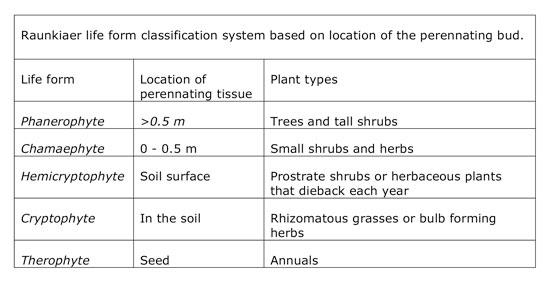
Table 1: Raunkiaer life course nomenclature system based on location of the perennating bud
Life forms can exist classified by the location of perennating tissue and institute types.
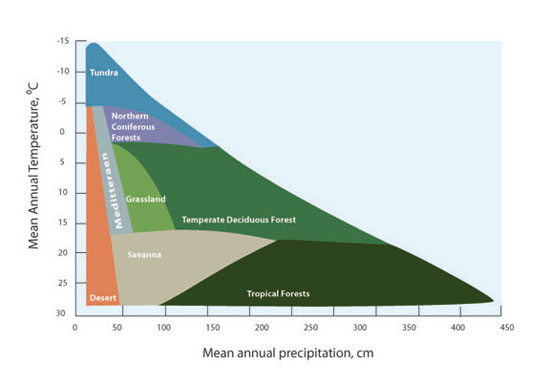
Effigy 1: The distribution of vegetation types as a function of mean annual temperature and precipitation.
Tropical Forest Biomes
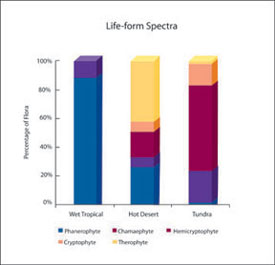
Effigy 2: Life-form spectra in dissimilar climates
Raunkiar classified plant life forms on traits that varied with climate, such as the perennating organ, or tissues that requite rise to new growth the following season.
Tropical forests are establish in areas centered on the equator (Effigy iv). Central and South America possess one-half of the world'south tropical forests. Climate in these biomes shows little seasonal variation (Figure 5), with high yearly rainfall and relatively constant, warm temperatures. The dominant plants are phanerophytes - copse, lianas, and epiphytes. Tropical rainforests have an emergent layer of tall trees over forty thou tall, an overstory of trees upwards to 30 one thousand tall, a sub-awning layer of trees and alpine shrubs, and a footing layer of herbaceous vegetation.
Tropical forests have the highest biodiversity and master productivity of whatever of the terrestrial biomes. Net primary productivity ranges from ii–3 kg m-two y-ane or college. This high productivity is sustained despite heavily leached, nutrient poor soils, because of the high decomposition rates possible in moist, warm conditions. Litter decomposes apace, and rapid nutrient uptake is facilitated by mycorrhizae, which are fungal mutualists associated with institute roots.
The tropical forest biome is estimated to contain over half of the terrestrial species on World. Approximately 170,000 of the 250,000 described species of vascular plants occur in tropical biomes. As many as 1,209 butterfly species accept been documented in 55 square kilometers of the Tambopata Reserve in southeastern Peru, compared to 380 butterfly species in Europe and N Africa combined.
The tropical forest biome is composed of several different sub-biomes, including evergreen rainforest, seasonal deciduous forest, tropical cloud forest, and mangrove forest. These sub-biomes develop due to changes in seasonal patterns of rainfall, pinnacle and/or substrate.
Savanna Biomes
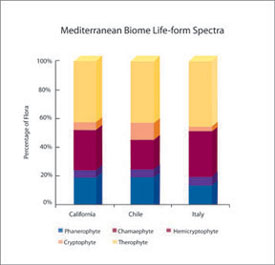
Figure iii: Life-grade spectra in similar Mediterranean type climates on unlike continents
Life-form spectra are more alike in similar climates on different continents than they are in different climates on the same continent.
Located north and south of tropical forest biomes are savannas (Figure 4), with lower yearly rainfall and longer dry seasons (Effigy 6). These biomes are dominated past a mix of grasses and pocket-sized trees. Savannas cover sixty% of Africa and represent a transition from tropical forests to deserts. Trees in savannas are normally drought deciduous. Several savanna types associated with differing rainfall patterns, elevation of the water table and soil depth can exist distinguished by their relative abundance of copse and grass.
Repetitive dry out flavour fires accept occurred in the African savanna over the last l,000 years. Fire plays a major role in the residue between trees and grasses in savannas. With long periods betwixt fires, tree and shrub populations increase. Fires release nutrients tied up in dead plant litter. Soil provides a expert thermal insulator, so seeds and beneath ground rhizomes of grasses are usually protected from damage.
Net main productivity ranges from 400–600 g chiliad-2 yr-1, but varies depending upon local conditions such as soil depth. Decomposition is rapid and year-round, and the almanac turnover rate of leaf cloth is high; upwards to 60–fourscore%. This turnover is aided by the rich diversity of large herbivores constitute in savannas, where up to 60% of the biomass can be consumed in a given year. Dung beetles are important components of the nutrient cycle due to their role in breaking down animate being droppings. The high herbivore diversity and product is mirrored by the great variety of predators and scavengers found in savannas.
Desert Biomes
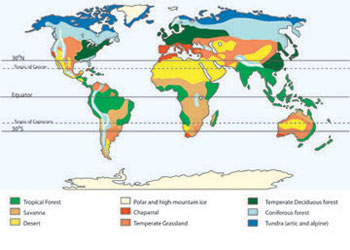
Figure four: Biomes of the earth
Biomes are regions of similar climate and dominant plant types.
Deserts generally occur in a band around the world betwixt 15–xxx° Northward and S latitude (Figure 4). They cover betwixt 26–35% of the land surface of the Earth. The climate of deserts is dominated by low precipitation, generally below 250 mm year-1 (Figure 7). Even so, at that place is a lot of variability in desert types, with hot deserts, cold deserts, high elevation deserts, and pelting shadow deserts. Consequently, there is a great deal of variation in the biodiversity, productivity and organisms found in dissimilar types of desert.
The dominant plant biomass in well-nigh deserts is composed of perennial shrubs with all-encompassing roots and pocket-size, gray or white leaves. Notwithstanding, in warm deserts, therophytes (annual plants) can make upwardly nigh of the species diversity (Effigy 2). Desert annuals can survive unpredictable dry out periods as seeds. Seeds may remain viable in the soil for several years, until the appropriate rainfall and temperature weather occur, after which they will germinate. These annuals grow rapidly, completing their life bicycle in a few weeks, so flowering and setting seed earlier soil water reserves are depleted. Winter desert annuals in North American deserts can generate over 1 kg m-2 of biomass in a wet year.
With the exception of large blooms of annuals, net chief productivity in most deserts is low and extremely variable. There is a positive relationship between productivity and precipitation, and values tin range from near 0 to 120 g m-2 yr-1. Just as with savannas, productivity volition vary with soil depth and local drainage patterns (e.yard., washes).
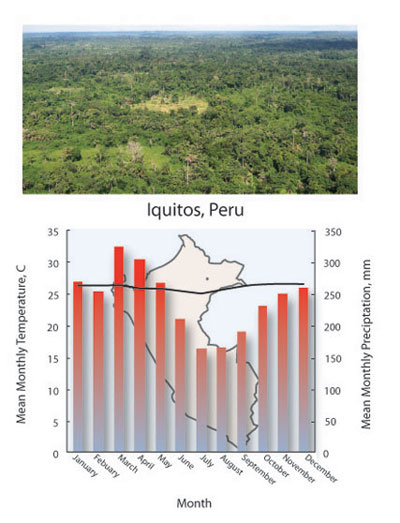
Effigy 5: Tropical forest biome climate diagram
Climate in these areas show little seasonal variation with high yearly rainfall and relatively constant, warm temperatures.
Grassland Biomes
Grassland biomes occur primarily in the interiors of continents (Figure 4) and are characterized by large seasonal temperature variations, with hot summers and cold winters (Figure 8). Precipitation varies, with a strong summer peak. The blazon of grassland community that develops, and the productivity of grasslands, depends strongly upon atmospheric precipitation. Higher precipitation leads to tall grass prairie with a high biodiversity of grasses and forbs. Lower precipitation leads to short grass prairies and arid grasslands.
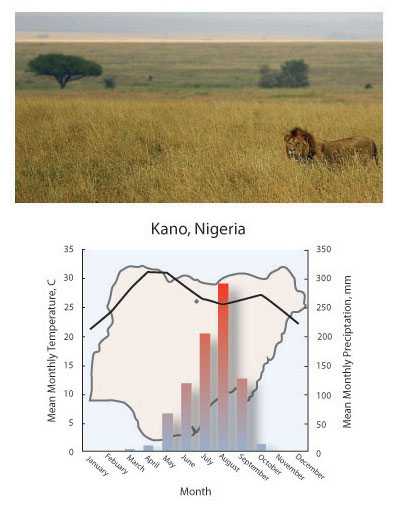
Effigy vi: Savanna biome climate diagram
Savannas are located north and south of tropical forest biomes and are characterized past lower yearly rainfall and longer dry seasons.
Net primary productivity in dry grasslands may exist 400 k m-two yr-ane, while higher precipitation may support up to one kg chiliad-2 yr-ane. Grasslands grade into deciduous forest biomes on their wetter margins, and deserts on their drier margins. The borders between grasslands and other biomes are dynamic and shift according to precipitation, disturbance, fire and drought. Fire and drought will favor grassland over forest communities.
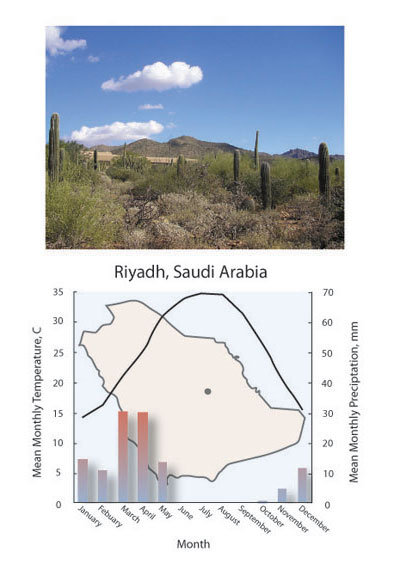
Figure 7: Desert biome climate diagram
There is a greater variability in desert types, with hot deserts, cold deserts, high tiptop deserts, and pelting shadow deserts.
Three major selective forces dominate the evolution of establish traits in grasslands, recurring burn down, periodic drought, and grazing. These factors have led to the dominance of hemicryptophytes in grasslands with perennating organs located at or below the soil surface. Many grasses have below ground rhizomes connecting above footing shoots or tillers. Grass blades grow from the lesser up, with actively dividing meristems at the base of the leaf. Thus when grazers swallow the grass bract, the meristem continues to split up and the blade can continue to grow. Grasses are often disuse-resistant, and recurring absurd, fast moving surface fires started past lightning at the end of summer aid in nutrient recycling. Fires stimulate productivity and the formation of fire resistant seeds.
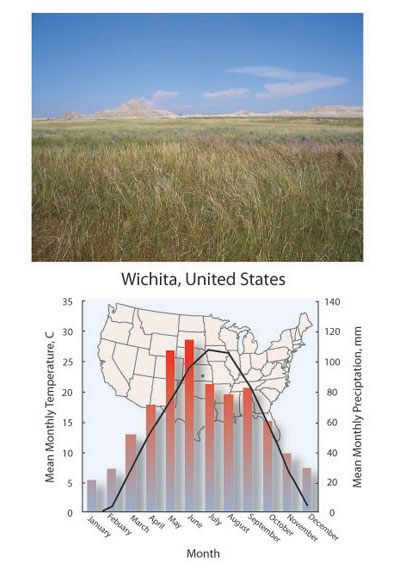
Effigy 8: Grassland biome climate diagram
Grassland biomes occur primarily in the interiors of continents and are characterized past big seasonal temperature variations, with hot summers and common cold winters.
Many of the world's largest terrestrial animals are found in grasslands. Animals such every bit gray kangaroos (Macropus giganteus) in Commonwealth of australia, Bison (Bison bonasus) and horses (Equus spp.) in Eurasia and North America were part of species rich assemblages of grazing animals, their predators, and scavengers. Remnant herds in North America advise that disturbances due to grazers increased local biodiversity past creating openings that rare species could colonize. Large grazers as well accelerated plant decomposition through their droppings, creating nutrient hotspots that altered species limerick.
Temperate Deciduous forest Biome
Temperature deciduous forests occur in mid-latitudes (Figure 4) where cool winters, warm summers, and high year round atmospheric precipitation occurs (Figure 9). Net primary productivity ranges from 600–1500 chiliad m-ii yr-i with high litter product. Litter serves as a major pathway for nutrient recycling. This biome is named for the dominant trees that drop their leaves during the wintertime months. These forests may have an overstory of xx–30 yard alpine copse, an understory of 5–10 g trees and shrubs, a shrub layer around 1–2 m in summit, and a ground layer of herbaceous plants. Biodiversity is relatively high in this biome due to the niche segmentation allowed by the multiple forest layers. More complex forests are associated with a greater number of creature species; for case, bird species diversity shows a positive correlation with wood height and number of layers.
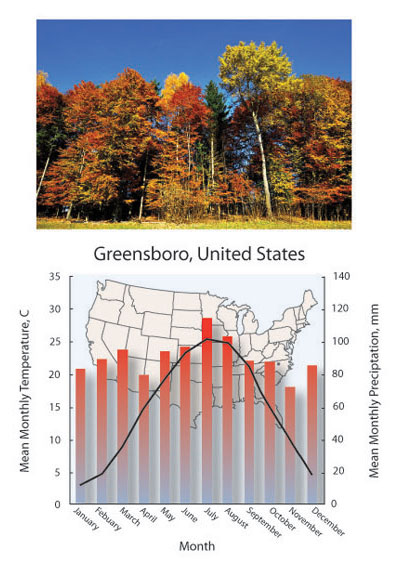
Figure ix: Temperate deciduous forest climate diagram
Temperature deciduous forests occur in mid-latitudes and are characterized by absurd winters, warm summers, and loftier year round atmospheric precipitation occurs.
Mediterranean Climate Biomes
This small biome (about one.8 one thousand thousand foursquare km) is separated into five separate regions between 30–xl degrees N and South latitude (Figure 4) with hot, dry summers, and cool, moist winters (Effigy 10). Unrelated evergreen, sclerophyllous shrubs and trees take evolved independently in each of these areas, representing a striking instance of convergent development. Net master productivity varies from 300–600 g yard-2 yr-i, dependent upon water availability, soil depth, and age of the stand. Stand productivity decreases after x–twenty years as litter and woody biomass accumulates. Recurring fires aid in nutrient cycling and many plants evidence fire-induced or burn down-promoted flowering. Some species are able to resprout from buds protected past the soil, while others germinate from decay-resistant seeds that prevarication fallow in the soil until a fire promotes their germination. Therophytes make upwards a large component of the flora, and their appearance is associated with openings created past fires.
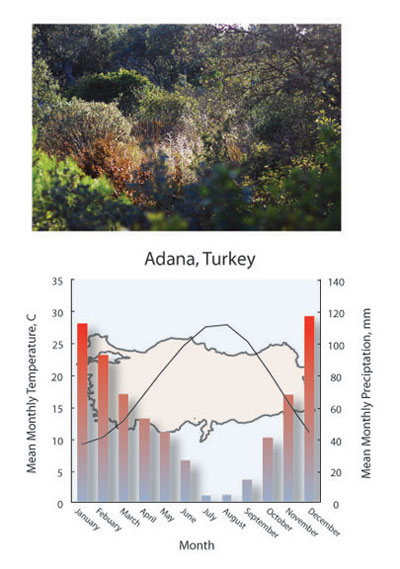
Figure 10: Mediterranean biome climate diagram
There are v dissever regions between 30-40 degrees N and Southward latitude with hot, dry out summers, and cool, moist winters.
Northern Coniferous Forest Biome
Located at higher latitudes is a biome dominated by needle-leaved, drought tolerant, evergreen trees (Figure 4), and a climate consisting of long, cold winters and brusk, cool summers (Figure 11). Biodiversity is depression in this two-layered forest made upward of an overstory of copse and a ground layer of herbs or mosses. The overstory in much of the boreal woods is fabricated upward of merely one or two species. The depression biodiversity is mirrored past depression net principal productivity of 200–600 g m-2 year-1. Productivity varies with precipitation, the length of the frost-free period, and local soil drainage. In flooded areas, sphagnum bogs may develop. The acidic tissue of sphagnum, and the anoxic, flooded conditions, slows decomposition, resulting in the production of peat bogs.
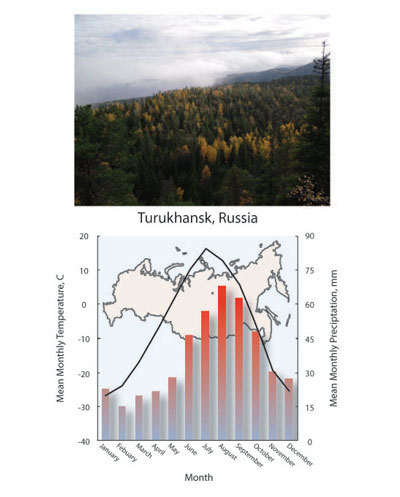
Effigy 11: Boreal forest biome climate diagram
Boreal forests are characterized by needle-leaved, drought tolerant, evergreen trees, and a climate consisting of long, common cold winters and brusque, absurd summers.
Biomass in tree trunks and long-lived evergreen leaves results in nutrients being stored in the plants. Low temperatures lead to dull decomposition and high litter accumulation. Upwardly to threescore% of the biomass may be tied up in litter and humus. Soils are heavily leached, and permafrost underlies much of the soil. Consequently, trees have shallow root systems and rely on extensive mycorrhizal associations for nutrient uptake.
Tundra Biome
At latitudes beyond the boreal woods tree line lies a marshy surface area (Figure four) where growing seasons are very short and temperatures are below nix degrees Celsius for much of the year (Effigy 12). Because of these low temperatures and curt growing seasons, net primary productivity is very low in the tundra, betwixt 100–200 yard m-2 yr-1. Productivity varies with snow depth and local drainage. Rocky fields and dry meadows will have lower productivity than moist, depression-lying areas and wet meadows.
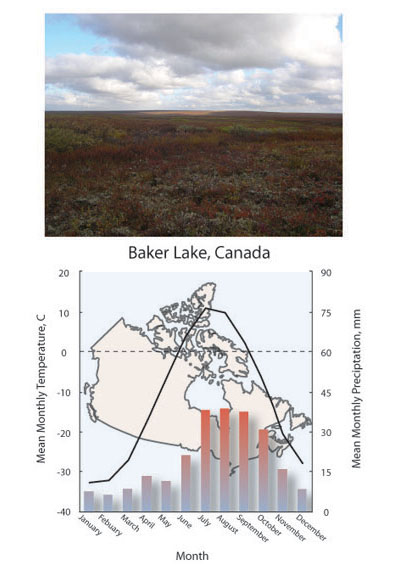
Figure 12: Tundra biome climate diagram
Very brusque growing seasons and temperatures that are beneath zip degrees Celsius for much of the year characterize tundras.
Biodiversity in the tundra is low and dominated by mosses, lichens, and low-growing perennial shrubs. The tundra biome contains only about iii% of the world'southward flora. Upward to 60% of the flora can be made up of long-lived hemicryptophytes. Windy conditions and low temperatures select for depression growing shrubs, oftentimes with tightly-packed, rounded canopies with closely spaced leaves and branches. Wind and ice harm assistance form this shape by pruning branches. The canopy morphology reduces air current speeds and absorbs solar radiation, resulting in canopy temperatures on sunny days more than than x° C higher up air temperature.
Soils are low in nutrients due to irksome decomposition rates and plants retain nutrients in long-lived evergreen tissues. Nitrogen fixation past lichens with cyanobacterial components is a major source of soil nitrogen. Animals accept extended hibernation periods or migrate seasonally.
References and Recommended Reading
Archbold, O. Westward. Ecology of World Vegetation. New York, NY: Chapman and Hall, 1995.
Cain, S. Life-forms and phytoclimate. Botanical Review 16, ane-32 (1950).
Prentice, L. C., Cramer, West. et al. A global biome model based on plant physiology and dominance, soil backdrop and climate. Journal of Biogeography 19, 117-134 (1992).
Raunkiaer, C. The Life Forms of Plants and Statistical Plant Geography. Oxford, UK: Clarendon Printing, 1934.
Whittaker, R. H. Communities and Ecosystems. London, UK: Macmillan, 1975.
Wilson, E. O. The Diversity of Life. New York, NY: WW Norton & Co., 1999.
Source: https://www.nature.com/scitable/knowledge/library/terrestrial-biomes-13236757/
Posted by: rosariocreter.blogspot.com
0 Response to "2. What Biome Would The Plants & Animals Listed Above In Question #1 Most Likely Inhabit?"
Post a Comment